Library · Why Armenia Should Be Free
Attitude of Russian Czarism toward the Armenians
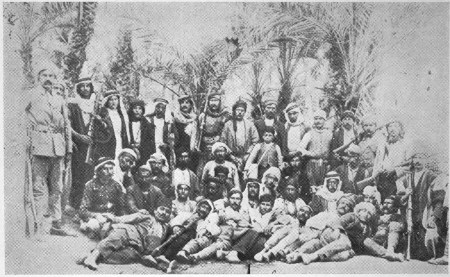
As we have already mentioned, from the beginning of the war the Russian bureaucracy tried on the one hand by various false promises to win over the sympathy of the Armenians, while on the other it tried by every means to keep the Armenian military forces away from the Caucasian front. Only seven battalions of Armenian volunteers were kept on the Caucasian front. As we have already seen, those few battalions even, in 1914 and 1915, rendered to the Russians invaluable services, twice saving the right and left wings of the Russian army from an unavoidable catastrophe by their heroic resistance; but the Russian official communiqués do not contain one line in which the battalions of Armenian volunteers are even mentioned. The same silence was maintained by the Russian communiqués concerning the heroic resistance of the Armenians at Van, and with regard to the assistance which the Armenian volunteers rushed to that city. This was the policy of the government of Russian Czarism from the beginning of the war to the end of its existence,—to avoid in every way speaking about the Armenians and Armenia. The Russian press was even forbidden to speak about the massacres carried on in Turkish Armenia at the hands of the Turkish government. Therefore, when the capture of Erzeroum in 1916 made the immediate co-operation of the Armenian volunteers unnecessary to the Russians, the commander-in-chief of the Caucasian army at the time, Grand Duke Nicolas Nicolaevitch, ordered the disbanding of all the battalions of the Armenian volunteers. Besides this amazing treatment of the Armenian military forces, the Czar’s government removed from the Caucasus before the war all the Armenian officers and replaced them by generals (manifestly anti-Armenian in spirit) from the Russians, Georgians, and other Caucasian races. The object of this move was to enable the government to check the national aspirations of the Armenians, and to give it a plausible opportunity at the end of the war to take over the Armenian vilayets without gratifying the demands of the Armenians for autonomy.
From the third month of the war, it became clear to us that the Russian government pursued unswervingly its Lobanoff-policy toward the Armenians. What was that policy? In 1896, when an English correspondent interviewed the Russian minister of foreign affairs, Count Lobanoff Rostowsky, and asked him why Russia did not occupy the Armenian vilayets of Turkey in order to save that Christian people from the Turkish massacres, the Russian minister cynically replied: “We need Armenia, but without the Armenians.” It is worth while, then, to give here a few actual facts which reveal this fiendish policy pursued by the Russian government toward a people which was the only one of all the peoples of the Caucasus and the Near East to help the Russian army by its unreserved co-operation, and which was the only factor that saved the Caucasian front from an unavoidable catastrophe in 1914 and 1915.
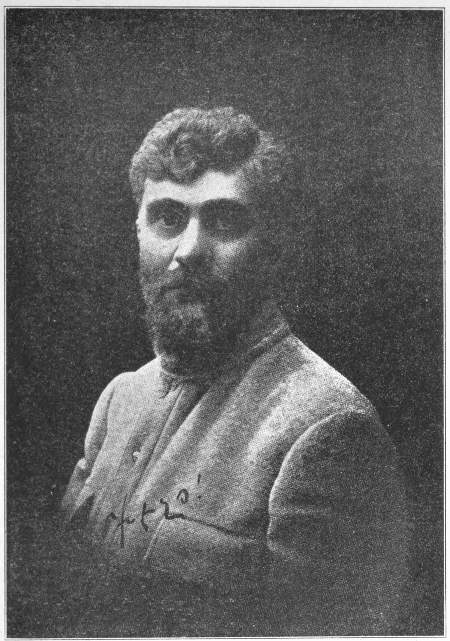
One. Every time that the Russian army was forced to retreat from the recaptured parts of Turkish Armenia, no precautionary measures were taken in order to save the local Armenian inhabitants from the inevitable massacres. For example, in December, 1914, when the Turks advanced as far as Sarikamish and Ardahan and forced the central Russian army to retreat from the neighborhood of Alashkert and Bayazid, the commander of the local forces, General Abatzieff (an Acétine Moslem who had joined the Greek church) strictly ordered the local Armenian inhabitants, nearly 32,000 in number, not to stir from their places, and in order to have his command accurately carried out he placed mounted Cossack patrols in the plains of Alashkert lest the Armenian peasants should emigrate toward the Russian frontier, in which direction the Russian army with its transports had already been moving since December 13. Three days later the second battalion of the Armenian volunteers, which had been fighting in the first-line positions for over two months under the command of the same general, returned to the army headquarters for a well-earned rest, and there only it heard about the serious happenings already mentioned, and the extraordinary attitude assumed by the Russian general. The Armenian peasants from every side appealed to the Armenian volunteers with tears in their eyes and begged to be saved from an inevitable massacre. The commander of the Armenian volunteers, Armen Garo, and his brave assistant, Khetcho, who died like a hero in July, 1915, on the shores of Lake Van, went immediately to General Abatzieff and asked him to revoke his order and permit the Armenian inhabitants to move with the army toward Igdir. The hostile general refused their request, his answer being that, if the people stirred from the place, he would be unable to remove the army transports soon enough. When he heard this answer, Armen Garo immediately telegraphed to Igdir and appealed to the commander-in-chief of the fourth army, General Oganowsky, and in touching words asked for his intervention. On the following day only, thanks to the intervention of General Oganowsky, the Armenian volunteers received permission to organize the retreat of the Armenian inhabitants of the plains of Alashkert toward Igdir and to defend them from the attacks of the Kurds. During the seven days that the retreat lasted the Armenians lost only 400 persons, and most of those on account of the severe cold. Another example of this hostile treatment of the Armenians by the Russian authorities might be mentioned,—the retreat from the Van district in July, 1915. There General Nikolaeff for eight continuous days deceived the Armenian leaders and made them remain idle (telling them every day that he would not retreat under any circumstances, and that therefore it was entirely needless to remove the people), until behold, one day, July 18, he suddenly sent for the mayor of Van, Aram, and the commander-in-chief of the Armenian volunteers, Vartan, and informed them that he had received orders to retreat immediately, but in order to make it possible for the people to prepare for departure, he would wait until the 20th of the month. Thus the Armenian leaders were forced to remove in two or three days nearly 150,000 people of the Van region, and if those three battalions of Armenian volunteers had not been there to protect the people from Kurdish and Turkish raids, the loss of life during the journey would have been tenfold more than it actually was. Whereas, if the Russian general had not been so deceitful in his behavior but had given an opportunity of seven or eight days to organize the retreat, it would have been possible to direct the people to Erivan without the loss of a single life. The Armenians suffered a loss of 8,000 to 10,000 men, women, and children during the retreat.
Two. When Turkish Armenia was almost wholly emptied of its Armenian inhabitants, due to these successive retreats, the Russian government raised all sorts of barriers before the refugees to prevent them from returning to their former homes when the Russian army recaptured the Armenian vilayets. For example, in 1916-1917, scarcely 8,000 to 10,000 Armenians were permitted to go back and inhabit the region of Van; the rest were compelled to stay within the borders of the Caucasus as refugees. Toward the latter part of 1916, even among Russian governmental circles there was talk of transferring to Siberia nearly 250,000 Turkish Armenian immigrants who had sought refuge in the Caucasus, because it was objected that no available lands existed there for them. Russians considered it a settled question that even after the war the Turkish Armenians would not be permitted to return to their own homes.
On the other hand, the same Russian bureaucracy resorted to every means to win the sympathy of the Turkish and Kurdish inhabitants remaining in Armenia. With that purpose in view, in the spring of 1916, on behalf of the ministry for foreign affairs at Petrograd, Count Chakhowsky with his own organization established himself in Bashkalé (a city in the district of Van) and distributed nearly 24,000 rifles to the Kurds of the neighboring regions. It is needless to say that not long after those very rifles were used by the Kurds against the Russian army both in Persia and Armenia. This amazing action of Count Chakhowsky was taken so openly that it was even known to ordinary Russian soldiers, who were extremely enraged against the Count, a fact which accounts for the murder of the same Count Chakhowsky in Persia by Russian soldiers, when the discipline of the Russian army was relaxed on account of the revolution which took place in the spring of 1917.
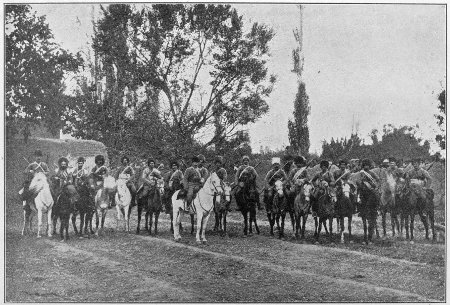
Three. While the Russians were preventing the Turkish Armenian immigrants from returning to their own lands, they, in the spring of 1916, commenced to organize in Turkish Armenia colonies of Cossacks. The Russian administration sent special propagandists to the northern Caucasus to persuade the Cossacks living there to move to Armenia, and during that same year 5,000 of them, under the name of agricultural battalions, were already cultivating the plains of Alashkert, lands which rightly belonged to the Armenians. This last act of the Russian government was so revolting that even the liberal organs of the Russian press complained of the government for such inhuman proceedings, while in the Russian Duma two Russian representatives, N. Milukoff and A. Kerensky (both of whom played such great roles the following year in the downfall of Czarism), publicly criticised the government of the Czar for its base treatment of the Armenians. Documentary evidence relating to this disgraceful action of the Russian government, which incensed the ire of prominent liberals in the Duma, may be found in the July 28, 1916, issue of the Retch, the organ of the Constitutional Democrats in Russia. In order to characterize this criminal action of the Russian bureaucracy against the Armenian people who were martyred for the allied cause, it may be worth while also to cite the following details:
In the month of July, 1915, the Armenian inhabitants of Erzeroum, nearly 25,000 in number, were likewise deported by the Turkish government, leaving all their real and personal property at the disposal of the Turks. The governor of the place, Tahsin Bey, arranged a scheme by means of which every Armenian before leaving the city could store his goods and household furniture (with the name of the owner on each article) in the cathedral, with the apparent purpose of returning them to their owners after the war, but with the real purpose of preventing so much riches from falling into the hands of the Turkish mob, in order to appropriate them later for the government. The cathedral of Erzeroum was packed with the goods of the exiled Armenians when the Russians captured the city in February, 1916. Ordinary human decency demanded that the Russians should not have touched the articles stored in that sacred edifice, especially as they belonged to the very martyred people whose professed sympathies for them (the Russians) were the cause of their being exiled to the deserts of Mesopotamia. But the fact is that the commander of the Russian army, General Kaledine himself, set the example of desecration; he personally entered the cathedral first, and selected for himself a few car-loads of rugs and sundry valuable articles. Then the other officers of the Russian army followed his example, and in a few days half of the contents of the church was already pillaged before the representative of the Armenian Committee, Mr. Rostom, after repeated telegrams, was able to receive an order from Tiflis to stop the plunder. In that same summer of 1916, the Buxton brothers (representatives of the Armenian Committee of London) and other English Armenophiles came to Armenia. When they witnessed all these disgraceful particulars they could not believe their own eyes, so monstrous was the attitude of the Russian government toward the Armenians. The English and American friends of Armenia consoled them by saying that on their return they would have the privilege of explaining this state of affairs to their government and that they would doubtless do all in their power to protect the rights of the Armenians. These were the circumstances under which the Armenian people joined its fate to the allied cause from the very beginning of the war, and, having made colossal sacrifices during three whole years, was almost crushed to death in the claws of Turkish and Russian despotism.
In that same sorrowful summer of 1916 the Armenians heard the news that England, France, and Russia had signed an agreement concerning Armenia. According to that agreement Russia was to take over the three vilayets of Turkish Armenia, Erzeroum, Bitlis, and Van, while southern Armenia and Cilicia were to be put under the guardianship of France. One must be an Armenian in order to feel the depth and intensity of the bitterness and disappointment which filled the hearts of all the wandering Armenians from the Caucasus to Mesopotamia. Every Armenian asked himself or herself: Was this to be our recompense?
In those very days (September, 1916) one of the agents of the German government in Switzerland approached Dr. Zavrieff (one of the representatives of the Armenian Committee of that place) with the following proposal:
“You Armenians made a great mistake when you joined your fate to that of the Allies. It is time for you to rectify your mistaken policy. Your dreams with regard to the historic Armenia are unrealizable. You may as well accustom yourselves to that fact, and before it is too late you will do better to join the fate of your people with the German policies, and remove the remnants of the Armenian people to Mesopotamia, where the Germans will put at the disposal of the Armenians every means which will enable them to create for themselves a new and a more fortunate fatherland under their (German) immediate protection.”
In order to persuade his Armenian opponent, the German agent constantly reminded him of the agreement (between England, France and Russia), and especially of the hostile attitude of the Russians up to that time towards the Armenians. The news of this German proposal reached the Caucasus in December of the same year. It was made the subject of serious consultation among the Armenian leaders. The writer of these lines was present at those conferences, and his impression was this: Had there not been that superhuman adoration (so peculiarly Armenian) which every Armenian has for his ancestral home and recollections so sanctified by blood, the German proposal would very likely have been accepted by the Armenians at that psychological moment when their hearts were overflowing with bitterness and disappointment toward the Russian government,—a member of the allied nations. The outcome of those conferences was that we decided to continue our former policy toward the Entente, in spite of the base behavior of the Russians towards us, and at the same time to invite the serious attention of our great Allies of the west to our hopeless situation.