Armenian Lives Matter
Armenians are very active in the Black Lives Matter and other movements at the expense of their own issues, including regular attacks on Armenians.
Armenians, Injustice, and Solidarity
It was not a month ago that many Armenians in the United States, Armenia, the United Kingdom, and elsewhere were proclaiming the need for Armenians to become exponents of Black Lives Matter, a misleading exhortation since Black Lives Matter, a self-proclaimed leftist organization with goals like disrupting “the Western-prescribed nuclear family structure,” which has led the protests throughout the world, differs significantly from the simple assertion that black lives matter.
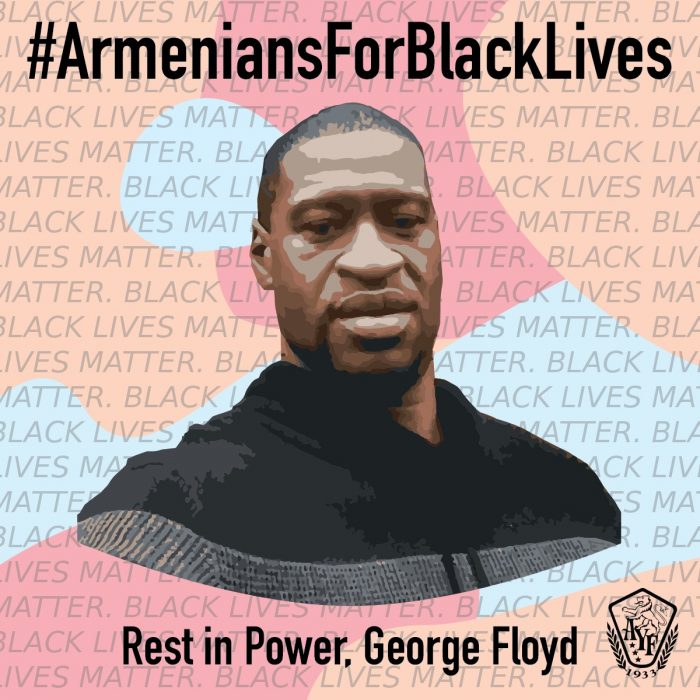
The horrific death of George Floyd, a convicted criminal and drug addict, became the impetus for many Armenians the world over to pronounce the cause of black justice. Numerous paeans to solidarity with blacks were produced in an amazingly short amount of time, emotional appeals resounded from social media, and scathing reproaches against Armenians who chose to not participate – or, audaciously, to disagree. An Armenians for Black Lives letter was translated into Armenian, a website was set up to record all the work Armenians are doing as part of the Black Lives Matter movement, and numerous panels were organized to discuss claims of injustice against blacks.
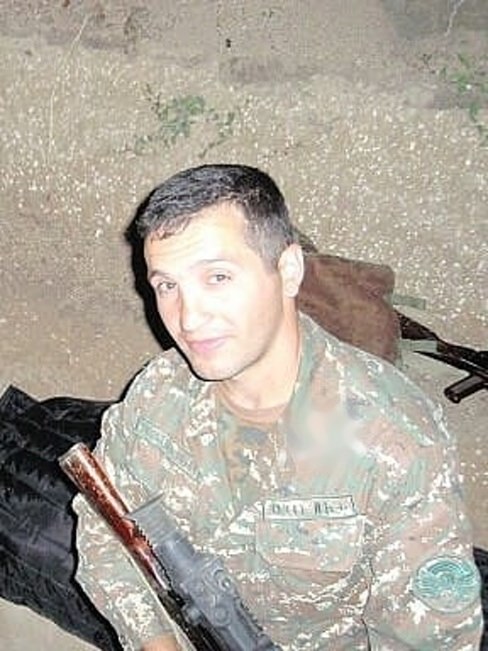
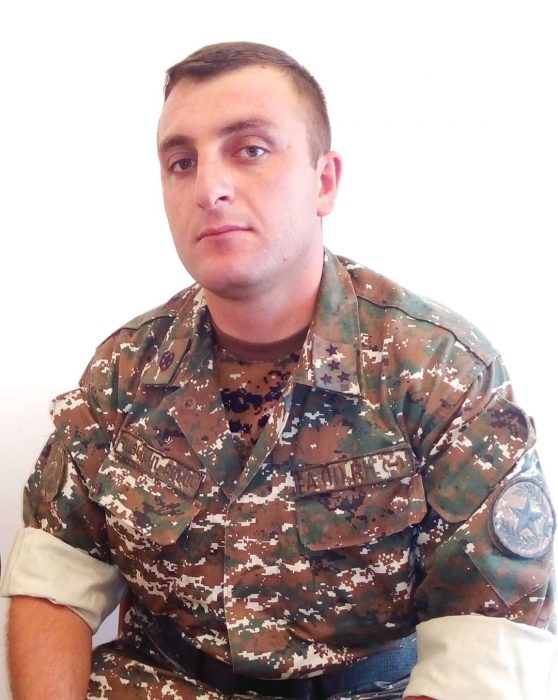
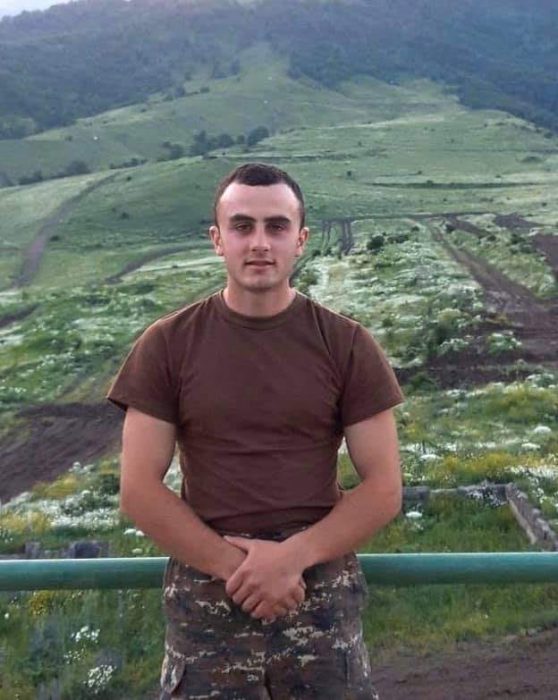
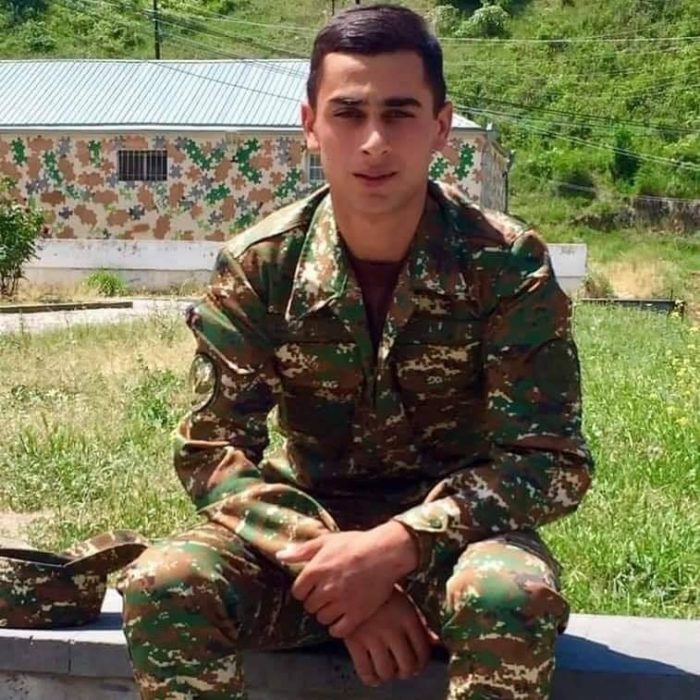
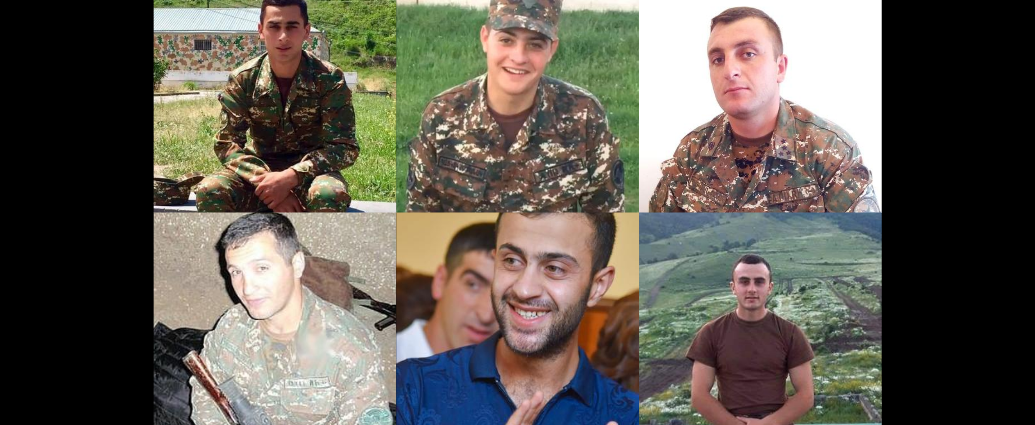
A few short weeks after Floyd’s death, Azerbaijan launched a relatively large-scale attack on Armenia, beyond the usual sniper fire on soldiers and villagers that takes place throughout the year. Six soldiers were killed, all young men; one of them left behind a wife pregnant with their first child. They died defending Armenia.
How many letters were penned? How many panels were organized to discuss the cause and significance of their deaths? How many rhapsodic pronouncements were recorded and shared? How many posters were made to memorialize their faces?
More to the point: who knows their names?
Others’ Causes
Armenians are frequently called upon to support others’ causes, despite having such limited resources that they have difficulty managing their own affairs, like operating community schools or prolifically creating sustainable, long-term projects in Armenia.
While it is understandable that the citizen of any country might want to participate in the affairs of that country’s political, social, economic, and cultural machinations, some explanation is required as to why the argument is made that Armenians must champion these causes because they’re Armenians.
In a piece in the Armenian Mirror-Spectator advocating for Armenian support of Black Lives Matter, Anaïs DerSimonian argues that, “The black struggle in America, like the Armenian struggle in the Ottoman Empire, is not a niche issue — it’s a human rights issue. As the survivors of the Armenian Genocide, we have a responsibility to uphold human rights, regardless of who that human is.”
Writing in Asbarez,, Razmig Sarkissian and Alik Ourfalian argue that Armenians should support Black Lives Matter because “…we know that pain. We should know that pain. Our ancestors felt that pain. We should empathize with that pain.”
Does such a moral imperative exist?
No.
Suffering injustice is not a choice and, thus, to say that because one experienced a misfortune involuntarily that he should be required or morally bound to support others who are suffering injustice is untenable. Of course, a moral imperative might be claimed on different grounds but that is not generally the case.
Moreover, Armenians are called upon to “reject injustice” with the injustice being presupposed and without any substantive discussion as to what the alleged injustice is. While the systemic racism against Armenians in the Ottoman Empire or modern-day Azerbaijan are often juxtaposed with claims of systemic injustice against blacks in the United States, it is not comparable. There has never been nor will there be in the foreseeable future a Turkish or Azerbaijani president, supreme court justice, or high-level minister of Armenian origin. Nor are there, or will be in the foreseeable future, Turkish- or Azerbaijani-Armenian billionaires, media moguls, academics, TV channels, or popular subcultures. There is no museum of Armenian history in Turkey or Azerbaijan, streets and buildings and schools aren’t named after Krikor Zohrab, Zabel Yesayan, or Khrimian Hayrig in these places. The dissimilarities here are black and white.
Solidarity and its Discontents
The presumed moral imperative is the basis for calls to solidarity with the oppressed group of the moment, which is premised on the idea of intersectionality, at its core a rendition of Marx’s call for the world’s oppressed workers to unite. It is appealing to some Armenians because they hope that in helping others, they will themselves be helped when the time comes, which it never does.
Problematically, however, solidarity based on shared experiences of injustice frequently and inexplicably leads Armenian concerns and even Armenians themselves to be subordinated to the greater cause. For example, Arpi Movsesian, writing in the Armenian Weekly, considers Glendale Armenians an especially pernicious group, referring to them as living in a “bubble.” In writing about Armenians’ success, she notes that, “We Armenians should not only credit our hard work and determination in being largely middle-class…but also our privileged position in today’s America.”
The befuddling insinuation Movsesian makes is that as white people, Armenians, who 100 years ago were exterminated from their homeland where they lived for millennia and who reestablished themselves starting from nothing in communities around the world, subsequently becoming one of the world’s most successful diasporas, have white privilege to thank for our success and well-being.
To summarize the argument, we are schizophrenically called to support Black Lives Matter because we have suffered injustice ourselves but we must accept the doctrine of “white privilege,” which implies we occupy a privileged status that has allowed us to avoid injustice relative to that which blacks have suffered.
The question of solidarity often goes into ludicrous territory such as Armenian advocacy for Kurdish issues. Kurds, a group with over 30 million members worldwide, were not only active and willing participants in massacring and exploiting Armenians prior to and during the Genocide but continue to enjoy the benefits of the culture and industry of Armenians who lived on the lands they stole a century ago. The trite arguments about Kurds saving Armenians, us “taking the high road,” or Kurdish mea culpas are unconvincing when Kurds continue to live in Armenian homes.
This subordination of any self-respect as Armenians in order to show our solidarity was nowhere on more vivid display during the Black Lives Matter movement than in Denver, Colorado, where an Armenian khachkar, the most distinct symbol of Armenian culture and the superlative objectification of Armenians’ Christian heritage, was defaced not once but twice.
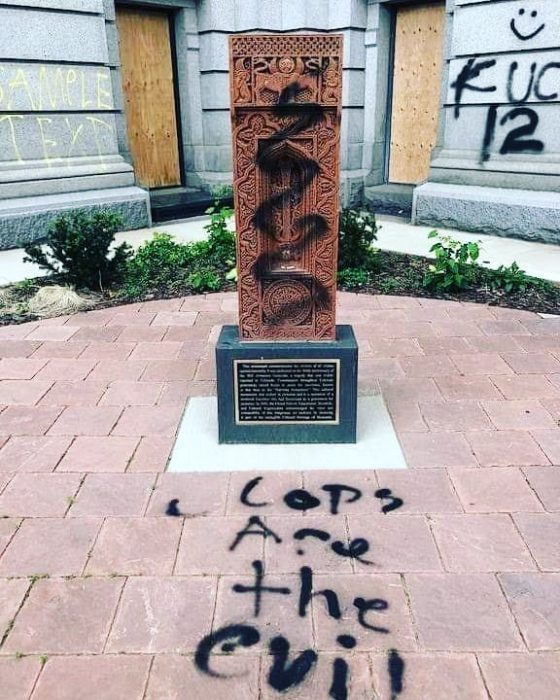
Surprisingly, many Armenians dismissed other Armenians for criticizing the vandalism. In one particularly acerbic reproach, one of the co-authors of the Armenian Academics for Black Lives letter, Natalie Kamajian, wrote a long public post upbraiding Armenians who criticized the desecration. The text, in full:
Armenians,
Please stop posting about the khachkar in Denver. Yes we get it, it was vandalized. Yes, it’s very unfortunate but… it’s an inanimate object. we also don’t know who did it and the anti-black racism I’m seeing on comments is literally making me sick. Do you know who’s stolen land that khachkar was erected on? Native peoples. The same stolen land you live and work on and reap benefits from with your white passing privilege
News flash: if you are going sit on STOLEN native land and cry about property that can be replaced while there is a slow state-sanctioned genocide of black people, whose lives cannot be replaced, happening before your very eyes and you STILL have the audacity to talk about reparations from Turkey…
YOU. ARE. A. HYPOCRITE.
consider this a sacrifice for the cause. and don’t think i don’t care about our sacred stonework:
1) im jughaetsi so if anyone is going to care about this khachkar it’s me; and
2) it’s a replica and it was obviously not a targeted attack against armenians because the entire state capitol building was vandalized. for real y’all most people still don’t know who we are or anything about our history (and yeah, that’s still on us).let’s not be racist and actually try to be allies here. let’s do better. for all of you who share the #armeniansforblacklives sentiment, will you put that into practice? head to these armenian pages on Facebook and call out racist folks in the comments. ՀԵՐԻՔԱ
Source: Facebook
While Kamajian is sickened by the comments about the defacing of the khachkar, not only is she apparently not sickened by the actual vandalism of a holy object, she reprimands those who are and then impels readers to consider the desecration of Armenian culture as a “sacrifice” for “the cause.”
If being castigated for thinking it wrong that one’s cultural monument was vilely defaced weren’t enough, Kamajian then claims there is a “slow state-sanctioned genocide of black people.” Putting aside the absolute falsity of claiming that black Americans are subject to genocide when their population has quadrupled in the past 100 years and their culture is freely and widely celebrated in America and, indeed, the world over, the readiness to disrespect the memory of Armenians who did experience a genocide during which they were violently massacred and dispossesed of their lives and property in advocating for solidarity with black Americans is extraordinary.
What About Armenians?
In addition to the July 2020 attacks on Armenia by Azerbaijan and the consequent deaths that resulted, 92 Armenian soldiers were killed in April 2016 when Azerbaijan again attacked Armenia. With the economic suffocation brought about through closed borders, shelling and shooting Armenian villages, threats against civilian flights, denial of history, destruction of culture, and allusions to completing the Genocide,Armenia and Armenians have their hands full with addressing injustice. This is to say nothing of the many – and more numerous – issues that are not related to injustice.
While having our hands full never seems to prevent Diasporan Armenians from making appeals to Armenians to support another cause, these perennial attacks and threats against Armenians never seem to elicit the same sustained and widespread paroxysmal indignation afforded to other causes. Why? Where are the academy-wide letters, the websites documenting Turkish and Azerbaijani aggression and violence, and the panel discussions on Azerbaijani anti-Armenian hate education?
Also striking is the total absence of substantive action on the part of communities with which Armenian groups have expressed solidarity. We are, after all, supposed to be “in this together.” But the case of black Americans is especially poignant given the recency of the Black Lives Matter movement, Armenians’ energetic solidarity, and the silence from the black community when Armenians were under attack.
If Armenians are expected to speak out for issues of concern to the black community – or any community – it should only be reasonable to expect that blacks will speak out on issues of concern to the Armenians that so devoutly support them in their time of need.
So why don’t they?
Black Americans, numbering about 40 million people, despite assertions of racial injustice, have ascended the highest offices of the United States. Yet, they have failed to address issues of pressing concern to the Armenian community, even when they have promised to do so.
Although a handful of so-called allies provide lip service to Armenians in different forums, the fact is that a black president (Barack Obama), a black attorney general (Eric Holder), two black secretaries of state (Condoleezza Rice and Colin Powell), a black national security advisor (Susan Rice), and many other high-ranking black officials didn’t seem to care much about either Armenian-American issues or issues with Armenia when they had an opportunity to act.
It was President Barack Obama, perhaps the most powerful exponent of intersectional politics ever, who, despite widespread and exultant support from the Armenian community in the United States, declined for eight years to properly recognize the Armenian Genocide, who tried to act as a handmaiden of Armenian-Turkish reconciliation without proper acknowledgement of that genocide, who failed to condemn egregious violence against Armenians by Azerbaijan, and who proposed record cuts in aid to Armenia.
In a more recent case, Ilhan Omar, a black Congresswoman from Minnesota and another outspoken champion of intersectionality, had the opportunity to speak up about the Armenian Genocide and not only didn’t, she repeated a line straight out of the Turkish government’s playbook.
The fact is, blacks have been in positions of power and able to help Armenians in their own cause repeatedly – but they haven’t. And this isn’t limited to the black community: the absence of reciprocal solidarity is present in all relationships where Armenians believe that through their investments of time, money, and goodwill, they will build coalitions that will produce meaningful returns. They do not – and will not.
That’s not to say that the thousands of Armenian man-hours expended on other causes does not elicit some token reaction from the personal friends of the Armenians involved in such projects and the odd organizational condemnation. But, to use the parlance of the activists, these are wholly “performative” actions that have no inherent value, not unlike the quadrennial exercise by US presidential candidates condemning the Armenian Genocide as a nod to Armenian concerns without an actual investment in substantively addressing the issue.
Quid Pro Quo
The lack of interest among black Americans and others for Armenian issues exposes the idea of solidarity against injustice for what it is: a lie. There is no more fundamental understanding in politics than that it operates on the basis of quid pro quibus. That is why I do not fault the members of other groups for not acting in my interest – I do not expect them to.
Each group is responsible for its own well-being and Armenians must understand that they – and they only – are responsible as a group for Armenian affairs. They should likewise not call upon or expect Armenians, as a group, to participate and expend time, energy, and money in the causes of others when Armenians have no reasonable expectation to gain anything from it.
Blind solidarity is a recipe for disaster because it is inherently superficial and, thus, insincere because it establishes a physically unsustainable principle where solidarity through action is distributed not only to those who have something to offer but indiscriminately to those who make a claim. Whose cause is worthy? Why is one cause more worthy than the next? Who decides? How many causes must one support? Why should I advocate for black Americans but not Hispanics? Why Hispanics and not poverty-ridden white Appalachians? Would it be possible to advocate for all oppressed groups or those claiming injustice with sincerity, while attending to one’s own group and their own issues? Certainly not, and this is evident.
This does not mean that Armenian individuals cannot or should not participate and contribute to whatever causes they deem worthy – that is their prerogative as free individuals. But no Armenian should call upon Armenians, as a group, to invest themselves in some cause unrelated to them as a group nor should they try to shame Armenians into doing so.
Armenians have enough concerns, in Armenia and in the Diaspora, to last many lifetimes. We have limited financial and human resources and we are not at a juncture in our history where we can afford distracting journeys on the bandwagon du jour in the hope that it is going to garner us that most ephemeral of rewards, goodwill.
Sarkissian and Ourfalian ask, “How can we demand justice for inhumane crimes committed against our people if we won’t do the same for another persecuted minority, for injustice happening before our eyes in the very country we live in?”
The simple answer: just like everyone else does.
This is dedicated to Smbat Gabrielyan, Grisha Matevosyan, Sos Elbakyan, Garoush Hambartsumyan, Ashot Mikayelyan, Artur Muradyan, soldiers of the Armenian Armed Forces killed in action while defending Armenia.